

Material Determines System Stability
In water treatment systems, people usually focus more on filtration processes, membrane systems, or chemical dosing, while easily overlooking a more fundamental but critical factor—the tank material itself.
Whether in municipal water supply or industrial wastewater treatment, long-term system stability largely depends on whether equipment can adapt to complex and changing environments.
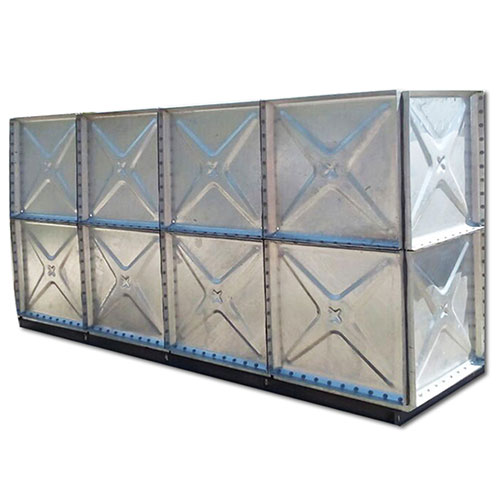
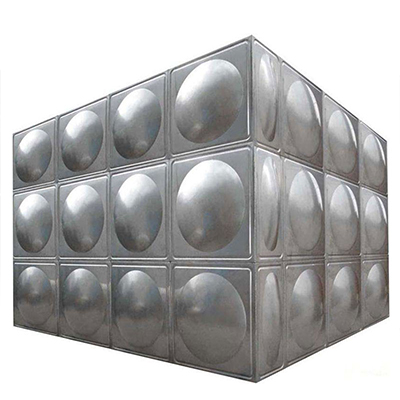
Traditional materials such as carbon steel, stainless steel, and concrete often suffer from corrosion, aging, or structural degradation when exposed to water, chemical media, and temperature variations over time.
FRP water tanks address this issue at the material level. They do not simply “resist corrosion,” but achieve stable compatibility with the environment through their inherent properties, significantly extending service life and reducing operational risks.
A Designable Composite Material
FRP is not a single material but a composite system made of resin, glass fiber, and functional additives. This structure gives it strong design flexibility, allowing targeted optimization for different application scenarios.
Engineers can select different resin systems and fiber layup structures based on water quality, operating environment, and functional requirements.
For example, in drinking water systems, food-grade resin can be used to ensure water safety; in industrial wastewater treatment, resins with stronger acid and alkali resistance can be selected.
This “on-demand design” capability upgrades FRP water tanks from standard products to engineering solutions, better meeting diverse water treatment needs.
More Than a Storage Container
In practical water treatment projects, FRP tanks do far more than store water. They often serve as key buffer units, balancing inflow fluctuations and handling instability caused by equipment shutdowns or process changes.
In some processes, tanks also directly participate in reactions such as chemical mixing, flocculation, sedimentation, and neutralization, which require higher corrosion resistance.
In industrial applications, FRP tanks are often used as safety buffer units at critical points. In case of system failure, they help prevent leakage and pollution spread, improving overall safety and reliability.
High-Strength Structural Design
FRP tanks achieve high strength while maintaining lightweight characteristics, thanks to their controllable internal fiber structure.
By increasing fiber content in stress directions or adjusting layup orientation, local or overall structural strength can be significantly improved—an advantage difficult to achieve with traditional metal materials.
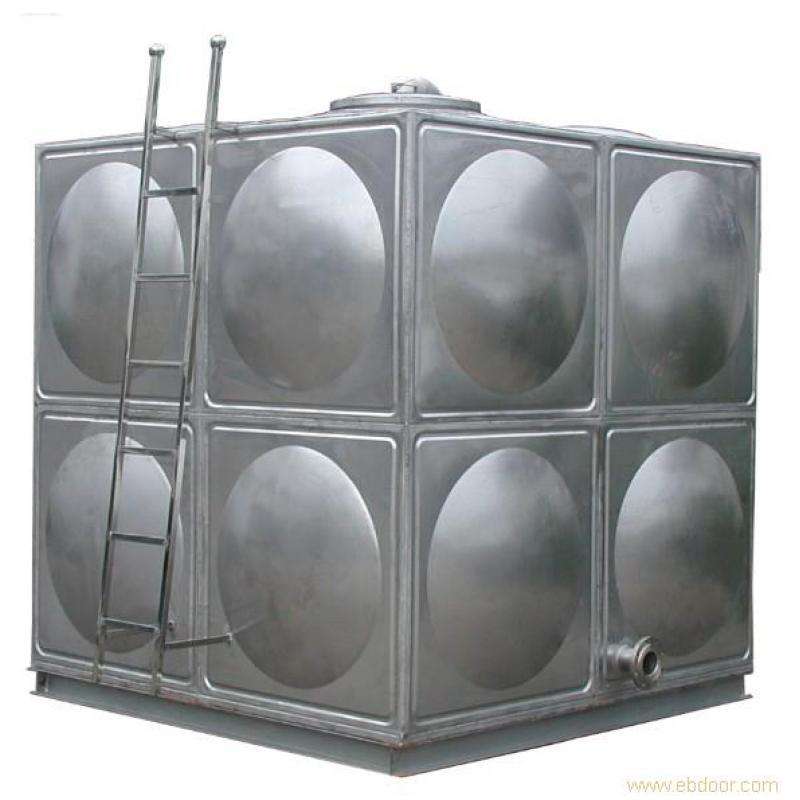
The most common FRP tank type is modular molded assembly. This structure is suitable for large-capacity projects, offering flexible transportation and installation.
Lifecycle Cost Advantage
From an operational and maintenance perspective, FRP tanks offer significant economic advantages. Due to their excellent corrosion resistance, they do not require frequent anti-corrosion treatment like metal tanks, greatly reducing maintenance costs.
In addition, their smooth inner surface reduces impurity adhesion, helping maintain stable water quality. Even if local damage occurs during use, it can be easily repaired without replacing the entire tank.
From a lifecycle cost perspective, FRP tanks achieve a better balance between initial investment and long-term maintenance, making them increasingly popular in modern water treatment projects.
Towards System Integration and Intelligence
As the water treatment industry moves toward intelligence and integration, FRP tanks are evolving from simple storage units into key system components.
By integrating with level sensors, water quality monitoring devices, and automation systems, tanks can achieve real-time monitoring and automatic adjustment, becoming key nodes for data collection and control.
In modular water treatment systems, FRP tanks are often integrated with filtration and dosing units, forming more compact and efficient integrated solutions.
This trend shows that the value of FRP tanks lies not only in material performance, but also in their ability to optimize and reshape the structure and operation of entire water treatment systems.

Hot Water Tanks
related posts